
Stainless steel cutting boards
Stainless steel cutting boards excel in hygiene, durability, and maintenance, making them ideal for users who prioritize cleanliness and long-term performance.
Hygiene & Food Safety
- Non‑porous surface — Stainless steel does not absorb juices, odors, or bacteria from meat, fish, or vegetables. This makes it one of the most sanitary cutting surfaces available.
- Easy to sanitize — Can be washed with hot water, soap, bleach solution, or run through the dishwasher without damage.
Durability & Longevity
- Extremely durable — Resists dents, warping, cracking, and chipping far better than wood, plastic, or bamboo.
- Heat‑resistant — Can handle hot pots or pans directly on the surface without damage.
- Chemical‑resistant — Safe against harsh cleaners that would damage wood or plastic.
Maintenance & Cleanliness
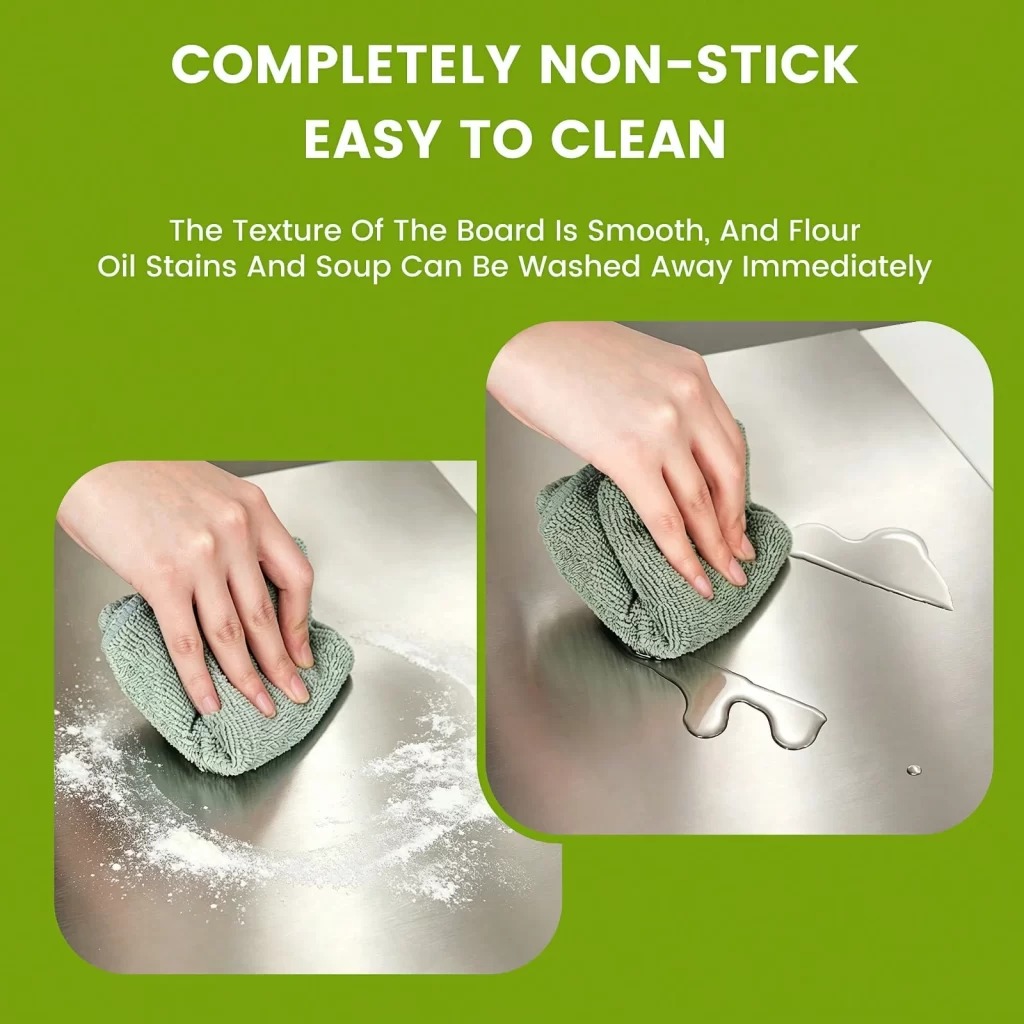
- No staining or odor retention — Foods like garlic, onions, or beets leave no trace.
- Low maintenance — No oiling, no special care routines, and no risk of mold in deep grooves (because there are none).
Aesthetic & Practical Benefits
- Modern, professional look — Matches stainless appliances and gives a sleek, commercial‑kitchen vibe.
- Stable surface options — Many boards include rubber feet or textured surfaces for grip.
The Main Trade‑Off: Knife Wear
- Stainless steel is harder than wood or plastic, so knives dull faster. However, modern 316L steel boards are closer in hardness to kitchen knives, meaning they don’t “destroy” blades — they just require more frequent honing.
Best For
- Users who prioritize maximum hygiene
- Heavy kitchen use where durability matters
- Environments where dishwasher sanitation is essential
- Modern or professional‑style kitchens
Compare stainless steel to wood, plastic, or bamboo based on your cooking style
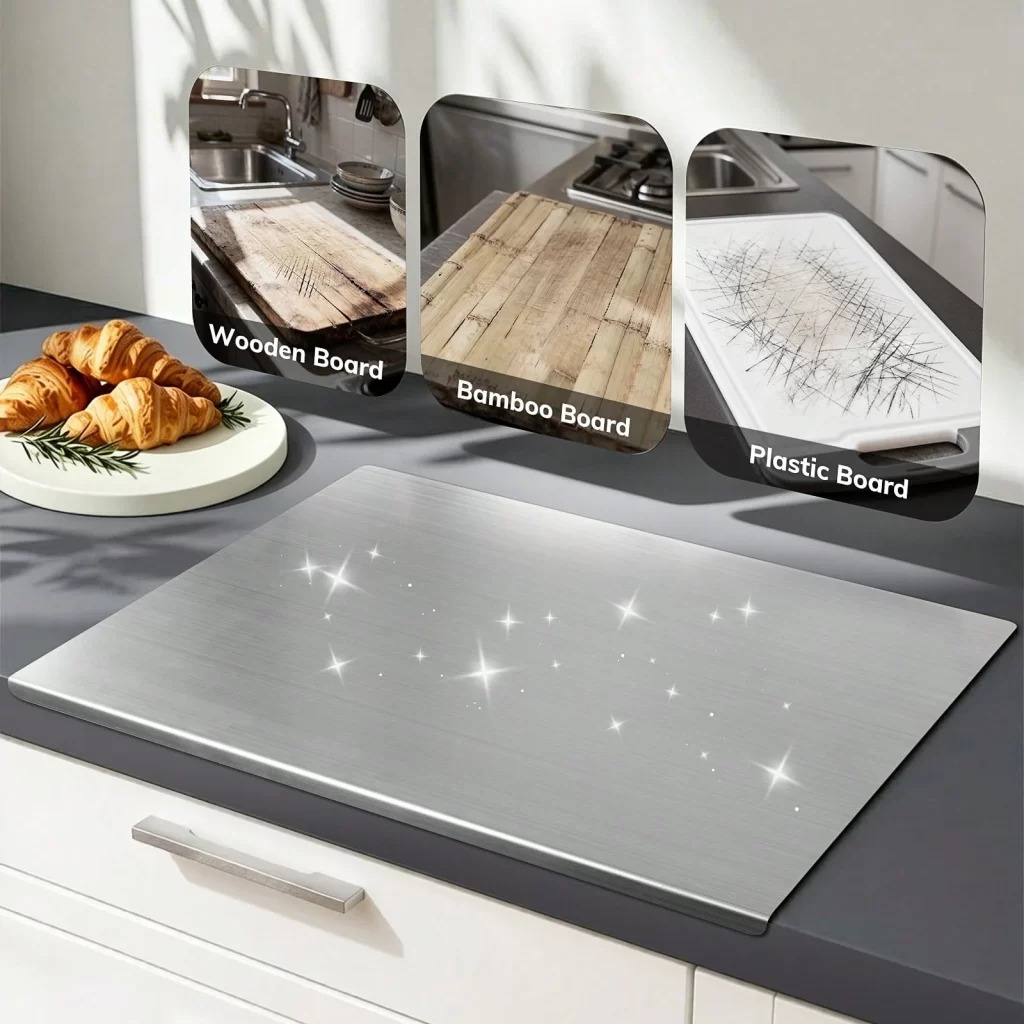
Stainless steel vs. wood vs. plastic vs. bamboo, but framed around how you actually cook. This way, you can see which surface fits which cooking style rather than just generic pros/cons.
Quick Takeaway
Stainless steel is the most hygienic and durable, wood is the best for knife longevity, plastic is the easiest to replace, bamboo is the eco‑friendly middle ground.
1. If You Cook a Lot of Meat, Fish, or Poultry
Best: Stainless Steel
- Non‑porous, zero absorption of juices or bacteria
- Sanitizes instantly with hot water, bleach, or dishwasher
- No grooves that trap raw meat residue
Runner‑up: Plastic
- Dishwasher‑safe
- But grooves form quickly and harbor bacteria
Not Ideal: Wood / Bamboo
- Porous; safe when maintained, but requires more care
- Must avoid soaking and must dry fully
2. If You Chop a Lot of Vegetables, Herbs, and Fruit
Best: Wood
- Gentle on knives
- Stable, quiet, and comfortable for long prep sessions
- Natural antimicrobial properties
Good: Bamboo
- Similar feel to wood but slightly harder
- More eco‑friendly
Less Ideal: Stainless Steel
- Hard surface can dull knives faster
- Louder chopping sound
3. If You Bake or Work With Dough
Best: Stainless Steel
- Cool surface helps with pastry work
- Zero sticking when dusted with flour
- Easy to scrape clean
Good: Wood
- Warm, comfortable surface
- But absorbs moisture and oils
Not Ideal: Plastic / Bamboo
- Too lightweight and can slide
- Scratches easily
4. If You Prioritize Maximum Hygiene
Best: Stainless Steel
- Non‑porous
- No staining, no odors
- Industrial‑kitchen level sanitation
Good: Plastic
- Dishwasher‑safe
- But scratches become bacteria traps
Least Ideal: Wood / Bamboo
- Safe when maintained, but requires discipline
5. If Knife Longevity Matters Most
Best: Wood
- Softest on blades
- Professional chefs’ preferred surface
Good: Bamboo
- Slightly harder than wood but still acceptable
Least Ideal: Stainless Steel
- Hard surface = more frequent honing
- Not damaging, but not knife‑friendly
6. If You Want Something That Lasts Forever
Best: Stainless Steel
- Won’t warp, crack, stain, or absorb anything
- Heat‑proof and chemical‑proof
Good: Wood
- Long‑lasting with proper oiling
Least Durable: Plastic
- Needs replacing often
7. If Sustainability Matters
Best: Bamboo
- Fast‑growing, renewable, low‑impact
Good: Wood
- Sustainable when sourced responsibly
Least Sustainable: Plastic / Stainless Steel
- Plastic = petroleum
- Steel = energy‑intensive manufacturing
Summary Table (Cooking‑Style Based)
| Cooking Style | Stainless Steel | Wood | Plastic | Bamboo |
| Raw meat & sanitation | ⭐⭐⭐⭐⭐ | ⭐⭐ | ⭐⭐⭐⭐ | ⭐⭐ |
| Knife friendliness | ⭐⭐ | ⭐⭐⭐⭐⭐ | ⭐⭐⭐ | ⭐⭐⭐ |
| Durability | ⭐⭐⭐⭐⭐ | ⭐⭐⭐⭐ | ⭐⭐ | ⭐⭐⭐ |
| Dough & pastry | ⭐⭐⭐⭐⭐ | ⭐⭐⭐ | ⭐⭐ | ⭐⭐ |
| Eco‑friendly | ⭐⭐ | ⭐⭐⭐ | ⭐ | ⭐⭐⭐⭐ |
| Low maintenance | ⭐⭐⭐⭐⭐ | ⭐⭐ | ⭐⭐⭐⭐ | ⭐⭐⭐ |
304 Stainless Steel Cutting Board Butcher Block Household Rolling Board Kitchen Supplies, Food Preparation, Meal Prep Tools, Modern Cutting Surface, Sleek Kitchen Tool, Rustresistant Material, Easy To Clean, Versatile Cutting Mat